Public cloud, on-premises servers or a hybrid model: how to design reliable, secure infrastructure suited to connectivity conditions in Chad.
Choosing between on-premises servers and the cloud is not a matter of fashion. It depends on expected availability, costs, security, data sensitivity and, in Chad, on the quality and redundancy of internet links. For most organisations, the right answer is a balance.
Hybrid cloud, a pragmatic choice
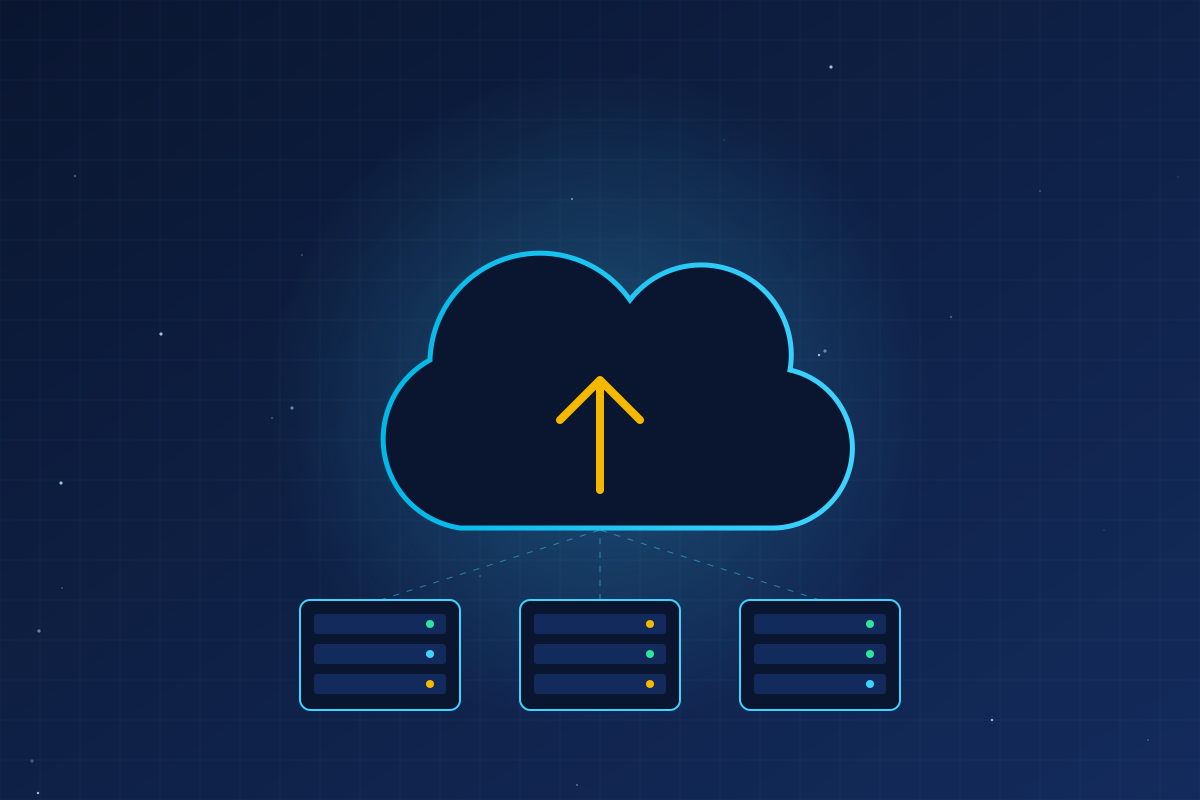
The hybrid model keeps critical or latency-sensitive applications on premises and moves to the cloud the services that benefit from being shared: email, collaboration tools, off-site backups or websites. This split limits dependence on the internet connection while taking advantage of cloud flexibility.
The foundations of resilient infrastructure
- Redundant connectivity: two links, ideally from two different operators, with automatic failover.
- Server virtualisation, to make better use of hardware and quickly restart a service after a failure.
- The 3-2-1 backup rule: three copies of the data, on two different media, one of them off site.
- Monitoring of servers, network and applications, to detect incidents before users do.
- Up-to-date documentation of the architecture and operating procedures.
Data sovereignty and security
Before migrating, you need to know where the data will be stored, who can access it and under which legal framework. Encryption, fine-grained access management and clear contracts with providers are essential, particularly for public, financial or health data.
A four-step approach
- Audit of the existing environment: hardware, applications, flows and constraints.
- Target architecture: what stays on premises, what moves to the cloud, and how everything is secured.
- Gradual migration, service by service, with the option to roll back.
- Operations and continuous improvement: monitoring, restore tests and adjustments.
2SC-TECH's Infrastructure & Cloud teams support you at every step. Tell us about your project.
Related expertise: Infrastructure & Cloud